Home / Best Time to Visit
Best Time to Visit Namibia
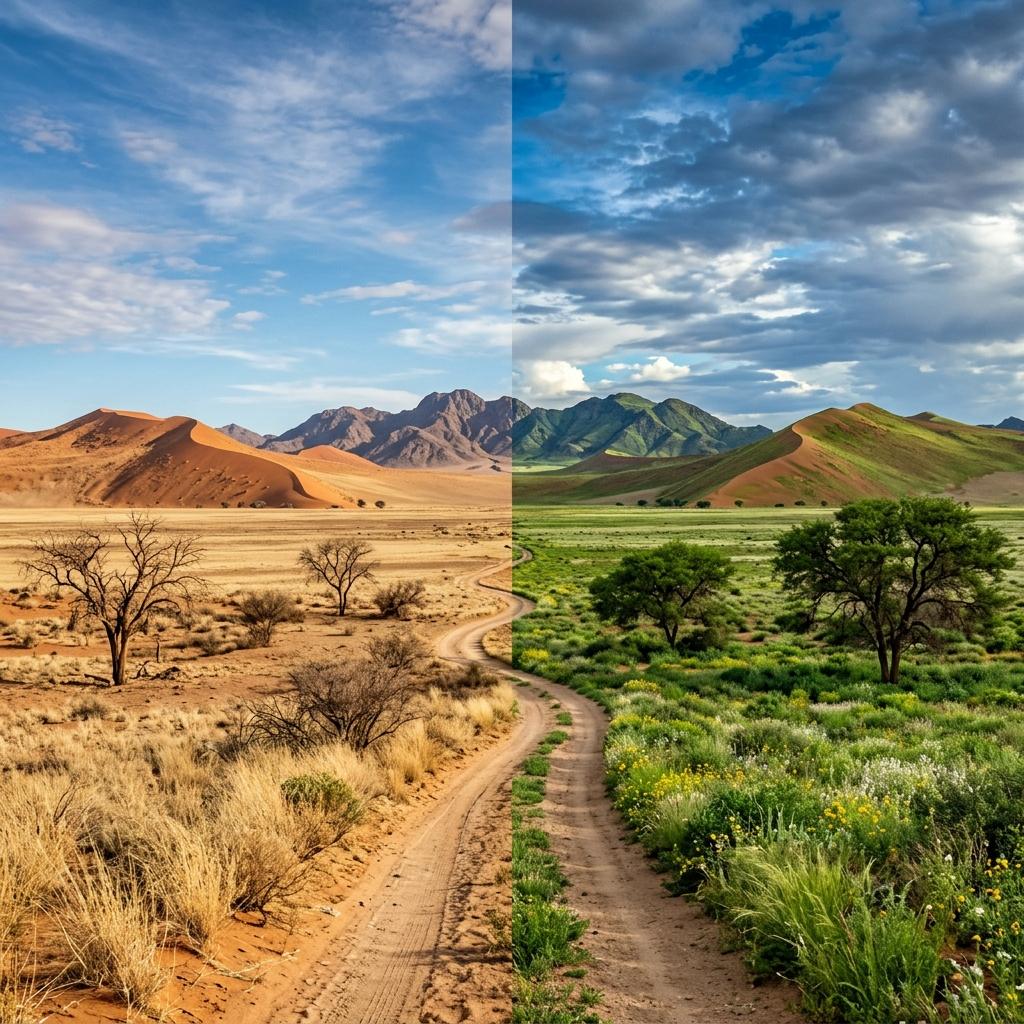
Dry season for wildlife, green season for birds and value — here's exactly when to go based on what you want to experience.
The Short Answer
For most first-time visitors: The dry season from May to October is the best time to visit Namibia. Wildlife congregates predictably at waterholes, skies are clear, and daytime temperatures are comfortable. July–September is absolute peak.
For budget travelers and birders: The green season from November to April offers dramatically lower prices, fewer crowds, lush landscapes, calving season, and over 450 migratory bird species. The tradeoff: wildlife disperses and is harder to spot.
Dry vs Green Season
Dry Season (May–Oct)
- Wildlife: Best game viewing. Animals concentrate at waterholes. Sparse vegetation means easy spotting.
- Weather: Days mild (20–25°C), nights cold (0–5°C in desert). Zero rain. Cobalt blue skies.
- Pricing: Peak rates. Book lodges 6–12 months in advance. Rental cars sell out.
- Best for: Safari game drives, Etosha, dune photography, first-time visitors.
Green Season (Nov–Apr)
- Wildlife: Animals disperse. Harder to spot but calving season (Jan–Feb) draws predators. 450+ bird species arrive.
- Weather: Hot (30–35°C). Short afternoon thunderstorms, not all-day rain. Humid in Caprivi.
- Pricing: Low season rates. Significant lodge discounts. Empty parks.
- Best for: Birding, photography (green landscapes), budget travel, avoiding crowds.
Month-by-Month Breakdown
| Month | Season | Temp | Rain | Wildlife | Price | Notes |
|---|---|---|---|---|---|---|
| January | Green (Wet) | 25–35°C | High | ★★☆☆☆ | $$ | Hottest month. Afternoon thunderstorms. Calving season draws predators. Best for birding. |
| February | Green (Wet) | 25–34°C | High | ★★☆☆☆ | $$ | Peak calving. Flamingos at Walvis Bay. Lush green landscapes. Budget-friendly lodges. |
| March | Green (Wet) | 23–33°C | Moderate | ★★★☆☆ | $$ | Rains tapering off. Still green. Good shoulder season value. |
| April | Transition | 20–30°C | Low | ★★★☆☆ | $$ | Rains end. Vegetation still green but drying. Excellent photography light. |
| May | Dry | 18–27°C | None | ★★★★☆ | $$$ | Dry season begins. Wildlife starts concentrating at water. Comfortable temps. |
| June | Dry | 15–24°C | None | ★★★★☆ | $$$ | Cool and dry. Excellent game viewing. Nights cold (can reach 0°C in desert). |
| July | Dry (Peak) | 14–22°C | None | ★★★★★ | $$$$ | Peak season begins. Best wildlife. Book 6–12 months ahead. Coldest nights. |
| August | Dry (Peak) | 16–25°C | None | ★★★★★ | $$$$ | Absolute peak. Maximum wildlife density at waterholes. Busiest month. |
| September | Dry (Peak) | 19–28°C | None | ★★★★★ | $$$$ | Still peak. Warming up. Last month before rains. Excellent for Etosha. |
| October | Transition | 22–32°C | Possible | ★★★★☆ | $$$ | Hot and dry. First rains possible late month. Wildlife still concentrated. Good value. |
| November | Green (Wet) | 24–33°C | Moderate | ★★★☆☆ | $$ | Rains begin. Landscape greens up. Cape Cross seal breeding. Migratory birds arrive. |
| December | Green (Wet) | 25–34°C | Moderate | ★★☆☆☆ | $$ | Summer holiday season. Hot. Good for coast (Swakopmund stays cool). Seal pup season. |
What to Pack
The fundamental rule of Namibian apparel is strategic layering. Desert temperatures can swing from 35°C at midday to below freezing at night.
☀️ Daytime (Hot)
- • Lightweight, breathable UV-protective shirts
- • Shorts and convertible trousers
- • Wide-brimmed hat and quality sunglasses
- • SPF 50+ sunscreen and lip balm
- • Sturdy closed-toe hiking boots
🌙 Nighttime (Cold)
- • Heavy thermal base layers
- • Thick fleece jumper
- • Down puffer jacket
- • Warm beanie and gloves
- • Sleeping socks for camping
Ready to Plan Your Trip?
Tell us your preferred dates and we'll design the perfect Namibia itinerary for your season.
View Travel Packages