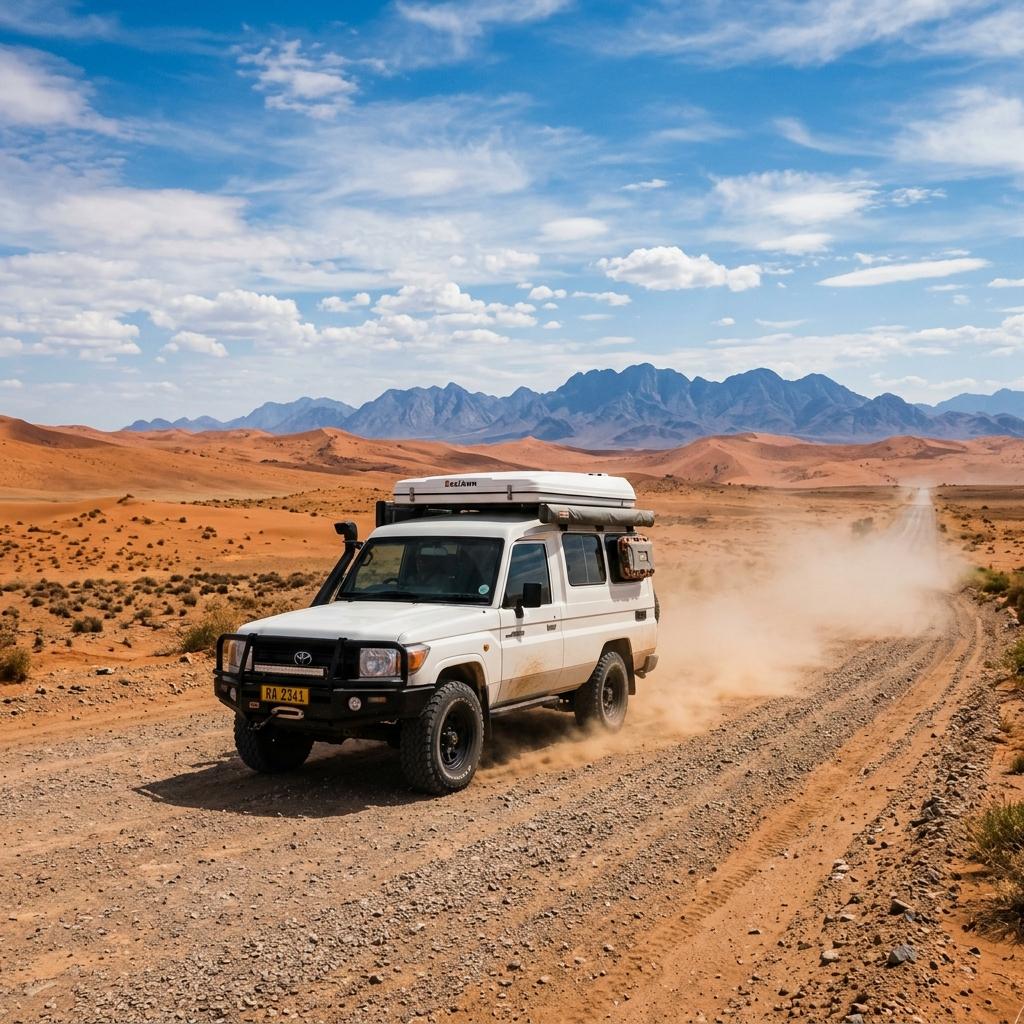
Learn how vehicle class, road conditions, rental contracts, insurance, and remote support shape a self-drive trip.
Choose the Vehicle Before Comparing Companies
Start with your overnight bases and the roads between them, including the final approach to each property. Send that route to the rental company before choosing the model, then decide whether you need camping equipment. A vehicle description alone does not establish that a road is suitable or permitted.
Use this guide to choose the vehicle and understand the contract. The gravel-road guide covers driving conditions and preparation; the rental quote worksheet helps compare written offers line by line.
Choose the drive system, then the overnight setup
These are route-planning options, not permission to drive a particular road. Check the rental contract, current road conditions and the property's arrival instructions together.
2WD sedan or SUV
Consider for town stays, paved routes and main gravel roads that both the rental company and your accommodation approve for the exact model.
Compare: Ground clearance, tyres, luggage space and the final property access road. An SUV body does not establish four-wheel drive.
4x4 without camping equipment
Consider when approved roads or property approaches call for four-wheel drive and you plan to sleep in rooms.
Compare: Drive-system demonstration, tyres and spares, luggage space and recovery arrangements. Owning the capability does not grant permission for every track.
4x4 with camping equipment
Consider when the route and overnight plan call for both the vehicle and a camping setup. Specify the number of sleepers and tent arrangement.
Compare: Bedding, fridge, cooking kit, water storage and payload. Allow time to learn setup and pack-down; a rooftop tent is a separate choice from the drive system.
Pump prices, road conditions, detours, vehicle consumption, and travel time all change. Build the budget from your quoted vehicle and current fuel price rather than a fixed web estimate.
Compare the excess, deposit and exclusions separately. The excess is your share of a covered loss under the contract; a security deposit is money held or charged under its terms. An excluded loss may fall outside the quoted excess limit.
Ask how the chosen cover treats tyres, windscreens, underbody and water damage, single-vehicle accidents, night driving and use of unapproved roads. Record any quantity limits, recovery charges and reporting or repair-authorisation requirements.
Planning check: Photograph the vehicle at collection and return. Get written confirmation of exclusions, excess amounts, tyre and windscreen treatment, road restrictions, recovery costs, and the process for authorizing repairs.
Confirm the driver's licence and any translation or international permit requirements for your licence-issuing country. Get the permitted route, named drivers, border permissions, collection/return times and camping inventory in writing.
Why the supplier and cover option matter
Namibia2Go's published inclusions list zero excess, tyre/glass waiver and no deposit, while listing water-damage waiver as excluded. Bushlore's published terms ask for the route in advance and a credit card in the hirer's name for the deposit. These illustrate different terms, not a supplier ranking.
Published pages checked 23 September 2026. Ask for the contract and cover schedule that apply to your vehicle, collection location and dates; no rate or deposit amount is quoted here.
Animals, unlit vehicles, road damage, and limited roadside help make night driving harder. Rental contracts may also restrict it, so read the exact wording.
Drive on the left
Namibia uses left-hand traffic. Build in an easy first day and take extra care at junctions and when returning to the road after stops.
Plan fuel by route
Do not assume every mapped station has fuel, power, or card service. Confirm likely stops locally, top up conservatively, and keep a payment backup.
Match speed to conditions
Follow signs, road rules, and any lower rental-company limit. Loose gravel, corrugations, dust, animals, and crests can require speeds well below the posted maximum.
Emergency Kit Checklist
Match the kit to the route, group size, season, vehicle, and supplier rules. Ask the rental company to demonstrate the jack, tools, spare-wheel access, and emergency procedure before departure.
✓ Supplier-agreed spare-wheel setup
✓ Puncture repair kit
✓ Air compressor (12V)
✓ Vehicle fluids specified by the supplier
✓ Recovery gear you know how to use
✓ Route-appropriate reserve water
✓ Approved fuel storage, only if needed
✓ First aid kit
✓ Offline maps and saved contacts
✓ Headlamp and batteries
Have Rental Quotes to Compare?
Move from the general vehicle and contract guidance to a line-by-line worksheet for actual rental offers.