Home / Culture / Himba People
The Himba People of Namibia
A living pastoral culture in northwestern Namibia, best approached through consent, context, and respectful guiding.
A Living Heritage
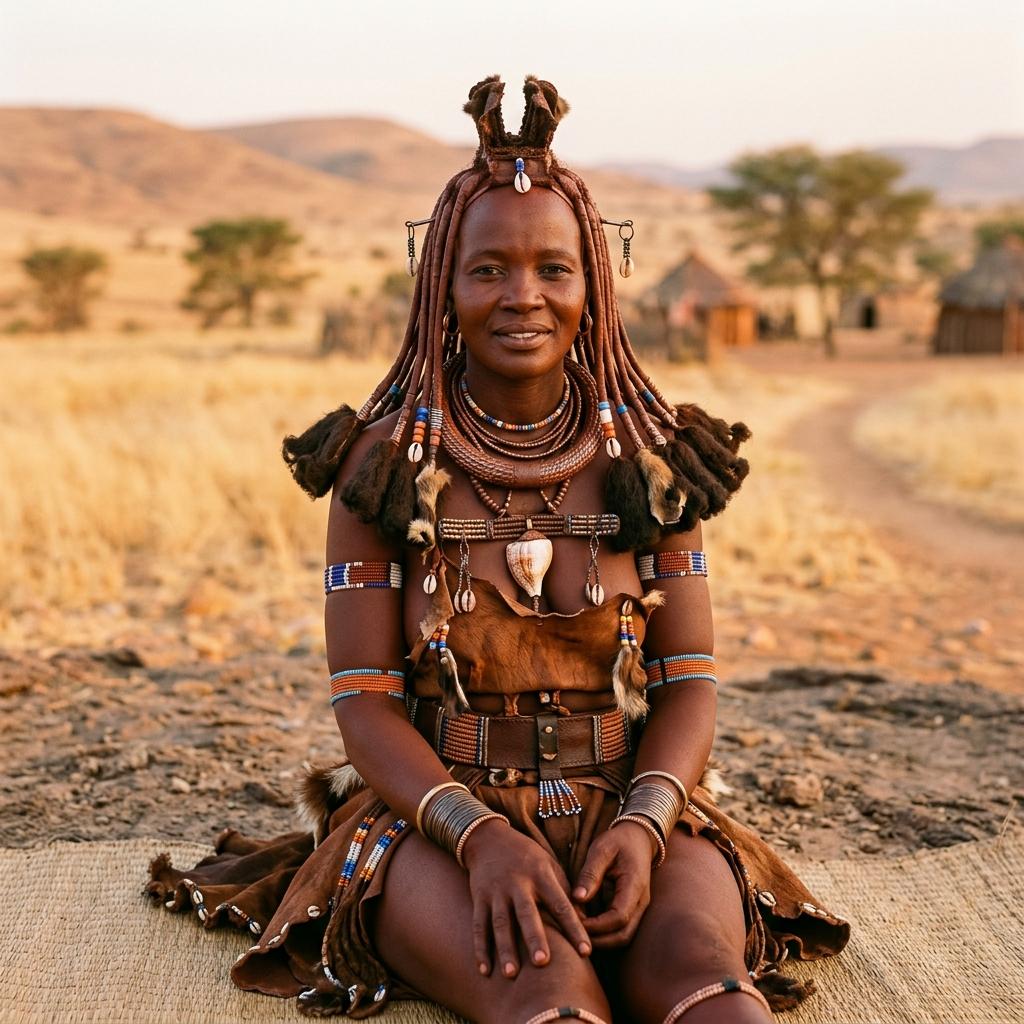
Ovahimba communities are associated especially with Namibia's Kunene Region and neighboring Angola, but they are not one uniform or frozen culture. Pastoral livelihoods, town life, schooling, wage work, family choices, clothing, hairstyles, and the use of otjize all vary between people, households, and places.
Visiting a Himba community can be meaningful when it is arranged with consent, context, fair payment, and a guide who is accountable to the community being visited. Namibia Plus does not facilitate visits directly; use this page to ask better questions before joining any cultural experience.
Cultural Traditions
Otjize Body Coating
Otjize, commonly described as a butterfat-and-ochre preparation, is used by some Ovahimba women and girls on skin and hair. Avoid presenting one symbolic or practical explanation as universal; meanings, materials, frequency, and personal practice can differ.
Hair & Adornment
Hairstyles and adornment can communicate age, life stage, family, and community custom, but simplified tourist charts flatten real variation. Let a community member or accountable local guide explain what they choose to share, and do not treat clothing or hair as permission to photograph.
Pastoral Life
Livestock and pastoral knowledge remain important for many families, while drought, land access, education, paid work, and mobility shape livelihoods. Household roles and spiritual practices should be described by the people involved rather than assigned as fixed rules for every Ovahimba person.
Visiting Ethically
Our Ethical Guidelines
Tourism offers profound avenues for cultural exchange, but it must avoid the voyeuristic pitfalls of “human safaris.” Use these checks to evaluate any guide, lodge, or operator before booking.
Accountable local guiding
Ask who authorizes the visit, who guides it, and how community consent is handled
Transparent payment flow
Ask how visit fees, guide fees, and craft purchases are distributed before assuming direct benefit
Ask before photographing
Always ask permission before taking photos, and respect a no without negotiation
Small, low-pressure visits
Prefer smaller groups, no staged pressure, and enough time for explanation rather than quick photo stops
Place context: Epupa Falls and the Kunene
Epupa Falls is a remote river destination, not a cultural attraction. Some travelers arrange nearby community visits, but being in the Kunene Region does not establish consent, local accountability, or a fair payment flow. Evaluate those separately and ask before photographing anyone.
Open the Epupa Falls guideSan Communities and Cultural Learning
“San” refers to diverse peoples and language communities, not a single culture. Their contemporary lives, knowledge systems, tracking traditions, and histories should not be reduced to a performance for travelers. Structured educational visits can be valuable when the participating community shapes the format and benefits are clear.
Before joining any San cultural activity, ask who designed the experience, whether photography is consent-based, how participants are paid, and whether the visit supports community priorities rather than only a lodge or intermediary.
Experience Namibia's Living Cultures
Use the planning checklist to ask about consent, guide credentials, group size, payment flows, and photography etiquette before joining a cultural visit.
Open Planning Checklist