Home / Destinations / Etosha
Etosha National Park
Namibia's flagship wildlife sanctuary — 22,000 km² of salt pans, waterholes, and extraordinary biodiversity.
The Great White Place
Covering over 22,000 square kilometers in northern Namibia, Etosha National Park is the country's flagship wildlife sanctuary and one of Africa's greatest reserves. Unlike the dense bushveld of South Africa's Kruger Park, Etosha is defined by its massive central salt pan — the “Great White Place” — which spans 20,000 square kilometers and is visible from low Earth orbit.
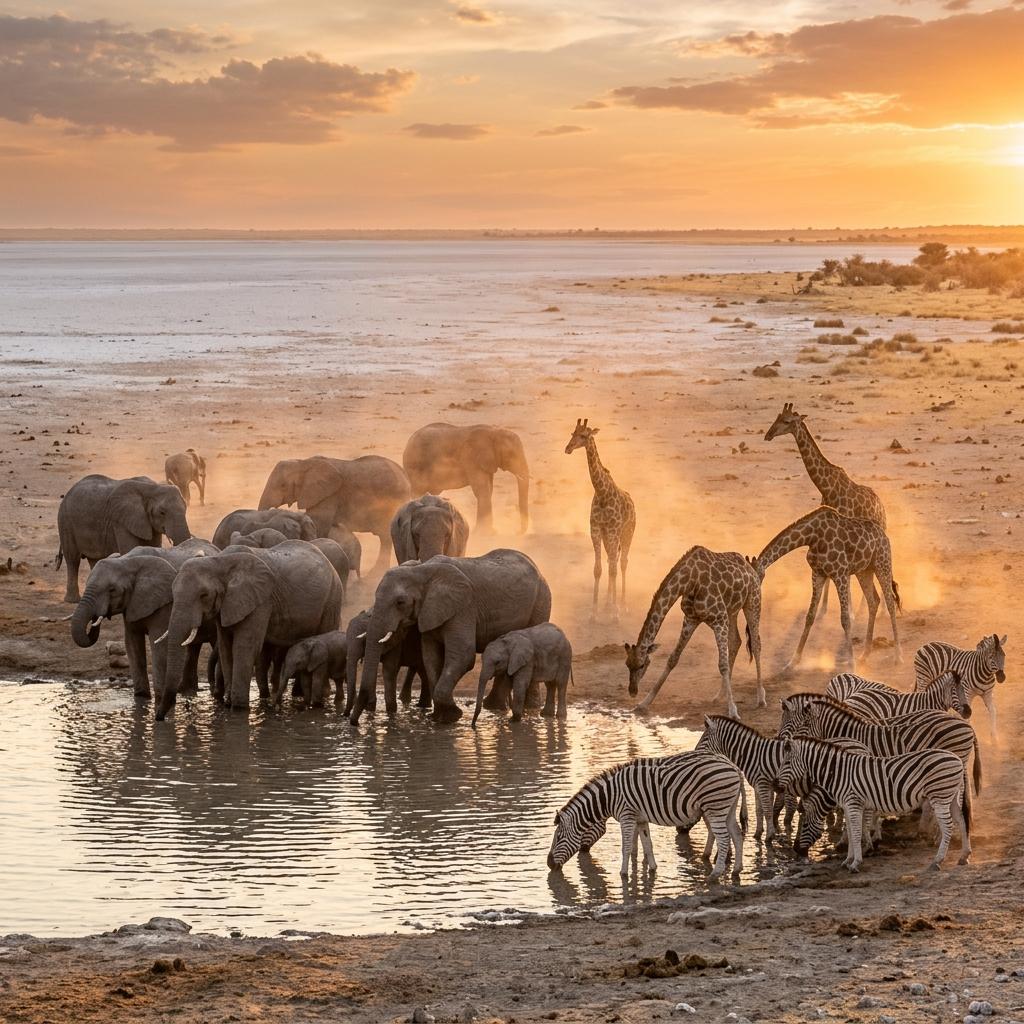
The park's ecology revolves around a network of natural and artesian waterholes scattered along the southern and eastern fringes of the pan. During the dry season (May–October), the severe lack of surface water forces wildlife to congregate densely around these permanent water sources — creating some of the most predictable and spectacular game viewing opportunities on the African continent.
Wildlife You'll Encounter
| Species | Best Season |
|---|---|
| Lion | May–Oct (best) |
| Black Rhino | Year-round |
| African Elephant | Year-round |
| Giraffe | Year-round |
| Zebra | Year-round |
| Springbok | Year-round |
| Cheetah | Year-round |
| Raptors | Year-round |
Famous Waterholes
Etosha's waterholes are its main attraction. Park beside one, switch off the engine, and watch an astonishing parade of wildlife approach in continuous waves.
Okaukuejo
The most famous waterhole in Etosha, floodlit at night. Sit on the stone wall of the rest camp and watch a constant procession of elephants, rhinos, and lions come to drink. Best for black rhino sightings after dark.
Halali
A quieter waterhole midway between Okaukuejo and Namutoni, also floodlit at night. Excellent for spotted hyena sightings and diverse birdlife. The surrounding hillside provides elevated viewing angles.
Namutoni
Located at the eastern end of the park, near the historic German colonial fort. The nearby Fisher's Pan is a major flamingo gathering site during the wet season. Best for birding and antelope herds.
Olifantsrus Hide
A dedicated photographic hide on the western side of the park. Built at ground level directly beside the water, it provides eye-level wildlife photography opportunities unavailable at the elevated camp waterholes.
Self-Drive vs Guided Safari
Self-Drive
Etosha is one of the most accessible self-drive safari parks in Africa. The gravel roads are well-maintained and navigable by 2WD. Stay at NWR rest camps inside the park and drive between waterholes at your own pace. Park entry is approximately N$100–150 per person per day plus vehicle fees.
- ✓ Complete flexibility and autonomy
- ✓ Budget-friendly option
- ✗ No night drives (gates close at sunset)
- ✗ Less wildlife interpretation
Guided Safari
Private reserves bordering Etosha — such as Ongava, Safarihoek, and Onguma — offer guided drives with expert trackers. The major advantage: night drives. Luxury lodges on private reserves operate outside park curfew rules, allowing unforgettable nocturnal encounters with lions and rhinos.
- ✓ Night drives and rhino tracking
- ✓ Expert wildlife interpretation
- ✓ Luxury accommodation
- ✗ Higher cost (from N$5,000/night)
Where to Stay
| Lodge | Highlight |
|---|---|
| Okaukuejo Resort | Floodlit waterhole — best for night rhino viewing |
| Halali Resort | Quiet mid-park base with night waterhole |
| Namutoni Resort | Historic German fort, near Fisher's Pan |
| Ongava Lodge | Night drives, rhino tracking, private reserve |
| Onguma The Fort | Moorish architecture, overlooking Fischer's Pan |
| Safarihoek Lodge | Elevated treehouses, exclusive game drives |
Plan Your Etosha Safari
Whether you prefer the independence of a self-drive adventure or the expertise of a private guide — our team will design the perfect Etosha experience.
View Safari Packages