How many seals are at Cape Cross?
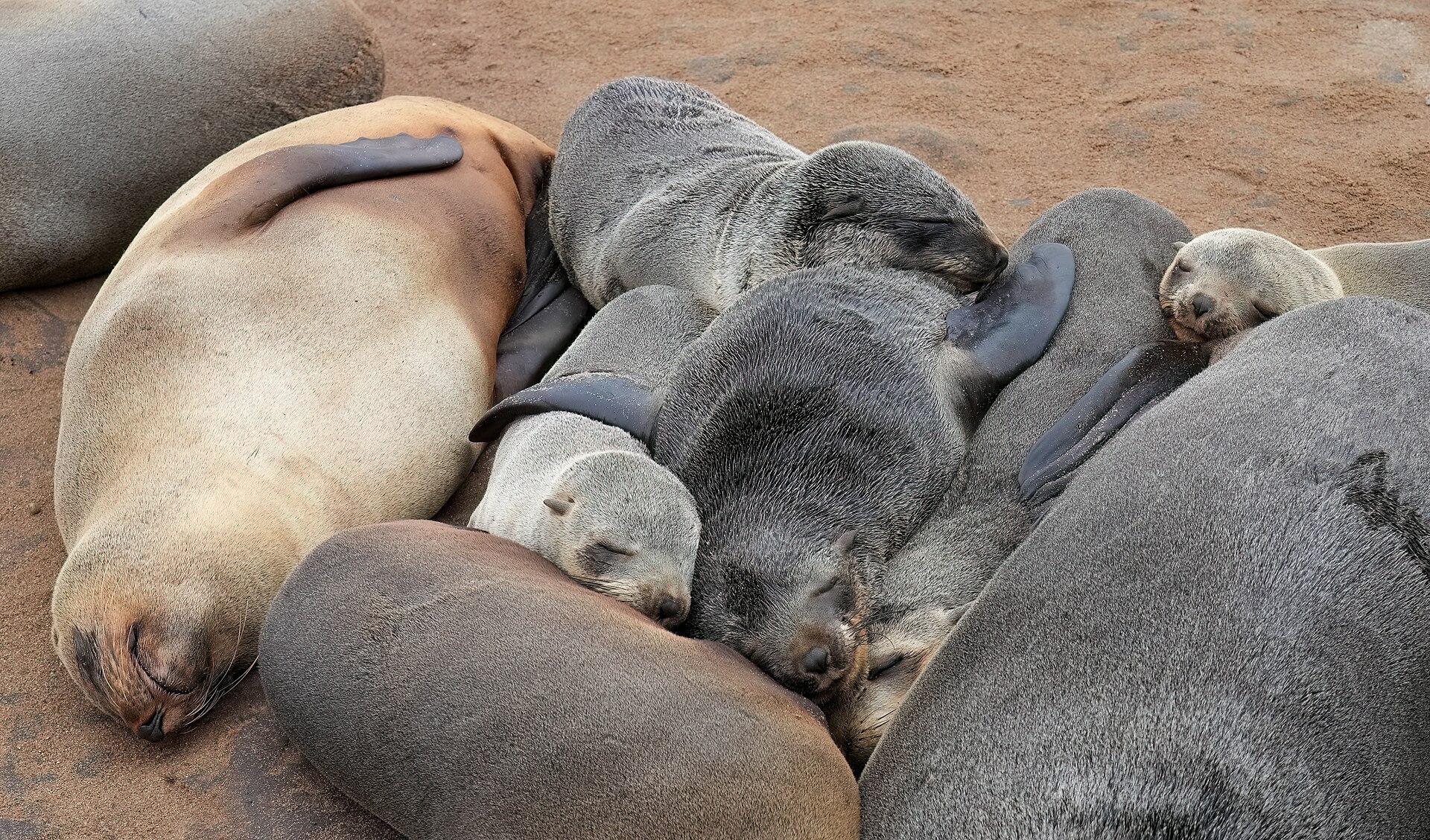
Up to 210,000 Cape fur seals during the November–December breeding season, according to the environment ministry. Thousands are present all year.
Home / Destinations / Cape Cross
The world’s largest Cape fur seal breeding colony, a half-day trip up the coast from Swakopmund.
A 200-metre walkway runs along the edge of the colony, a few metres from thousands of seals. It is suitable for wheelchairs, and the reserve has toilets, a picnic area and five basic campsites. Cape Cross is not part of Skeleton Coast Park; it is a separate reserve south of the Ugab River.
Opening hours come from the ministry's reserve brochure, which predates 2010; check them locally on the day. Children's rates are in the park fee table, which applies to Cape Cross too.
Seals are here all year. The colony peaks in the November–December breeding season, when the ministry counts up to 210,000 animals. Bulls fight for territory, pups are born, and black-backed jackals and brown hyenas patrol the edges for weak or dead pups.
Coastal fog is common in the morning and usually lifts later in the day. Between 1 July and 15 November the reserve opens at 10:00 rather than 08:00, so there is no point in an early start in those months.
Drive north from Swakopmund on the C34, a salt-surfaced coast road, through Henties Bay to the signed turn-off. The reserve is 120 km from Swakopmund. Allow half a day for the round trip and the walkway, or join a guided day trip from Swakopmund.
From Cape Cross you can continue north to the Ugab Gate of Skeleton Coast Park or turn inland towards Damaraland. The Brandberg, Namibia's highest mountain, is visible on clear days.
In 1486 the Portuguese navigator Diogo Cão erected a stone cross, or padrão, here to claim the coast for King John II of Portugal. After the area became part of German South-West Africa, the original was taken to Germany in 1893. Kaiser Wilhelm II had a copy put up in 1895 with a German inscription and the imperial eagle, and a faithful replica of the Portuguese cross followed in 1986. Both stand at the site today, which is a National Heritage Site. In 2019 Berlin's Deutsches Historisches Museum agreed to return the original to Namibia.
From 1895, guano from seabird colonies was dug here and shipped to Europe as fertilizer. For about nine years a small settlement grew up, with Namibia's first railway line and a post office. Rusty remains are still scattered in the sand, and the old landing bay is now a salt pan. Seals are also still harvested in the reserve each year under a quota set by the fisheries ministry.
A private lodge borders the reserve, and the reserve has five campsites. The Namibia Wildlife Resorts campsites at Mile 72 and Mile 108 lie further along the coast.
Most visitors stay in Swakopmund and make Cape Cross a day trip.
Up to 210,000 Cape fur seals during the November–December breeding season, according to the environment ministry. Thousands are present all year.
November to January, when pups are born and the colony is at its largest. Any month works for seeing seals. Mornings are often foggy, and from July to mid-November the gate opens only at 10:00.
Yes. It is 120 km each way on the C34. Allow half a day for the drive and the walkway, or a full day if you add the lichen fields and Henties Bay. Several Swakopmund operators run guided trips.
No. Cape Cross is a separate seal reserve south of the Ugab River. Skeleton Coast Park begins further north at the Ugab Gate and has its own permits and gate times.
No. The 1486 original was taken to Germany in 1893. Two replicas stand at the site today, from 1895 and 1986. In 2019 Germany’s Deutsches Historisches Museum agreed to return the original to Namibia.
Related guides
Use these related guides to keep the route, budget, booking checks, and departure prep connected.
Choose a central-coast base, plan weather-dependent activities, understand beach conditions, and connect Walvis Bay or the northern coast.
Open guideAccess diagram, Cape Cross geography, southern road routes, shipwreck history and remote lodge arrivals.
Open guideCompare Sossusvlei, NamibRand, the central Namib near Swakopmund and the Naukluft Mountains, with park facts, welwitschia and fairy circles.
Open guideCompare central- and southern-coast stops, cold-water conditions, protected areas, surf decisions, and route fit.
Open guideWhere wildlife viewing fits by region, season, habitat, and route style.
Open guide