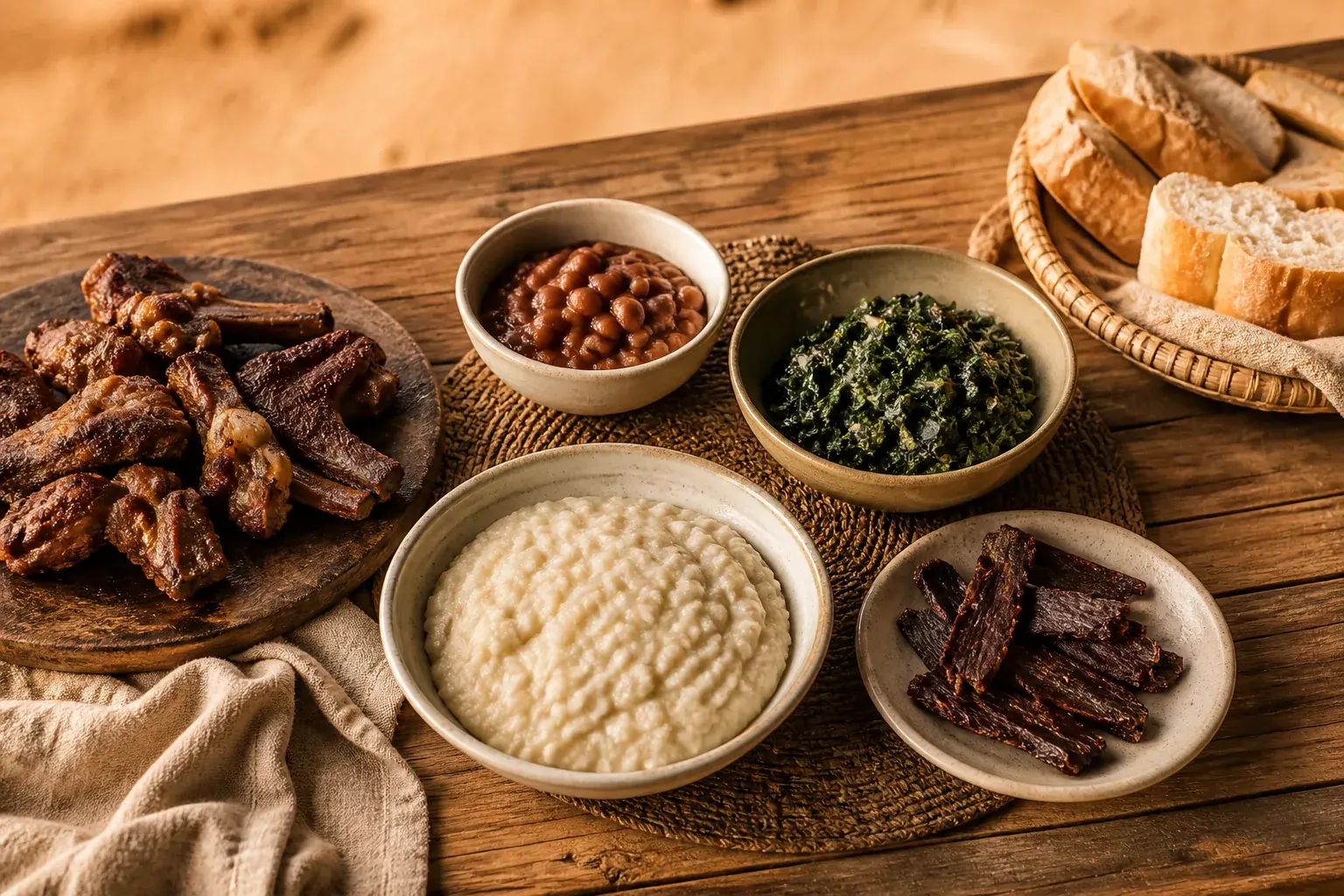
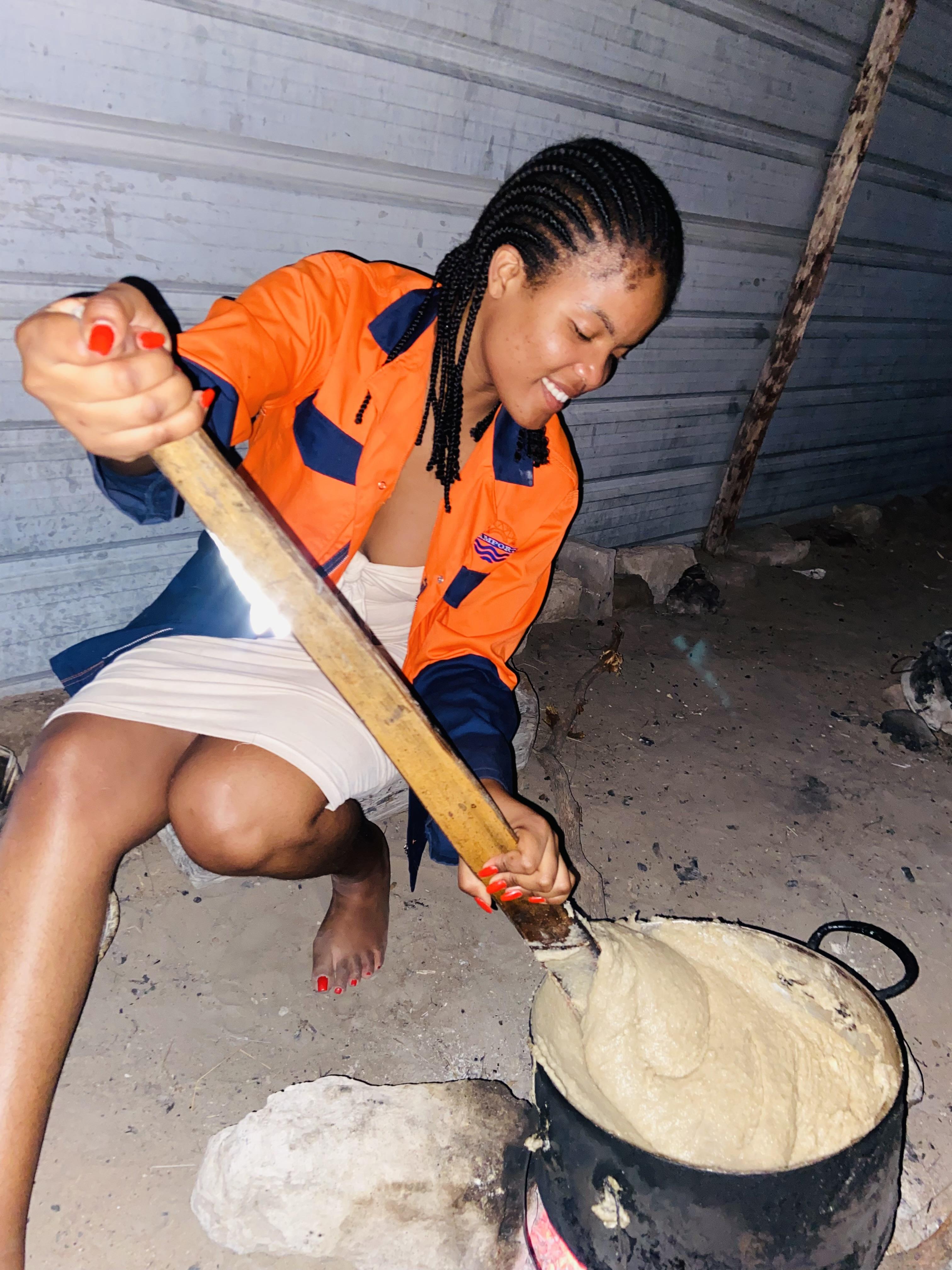
| Mahangu / oshifima | Mahangu is pearl millet; oshifima is a firm porridge. Some versions use maize. | Context: Especially northern Namibia; grain and accompaniments vary. | Ask: Which grain is used, and does the relish contain meat, stock or dairy? |
|---|
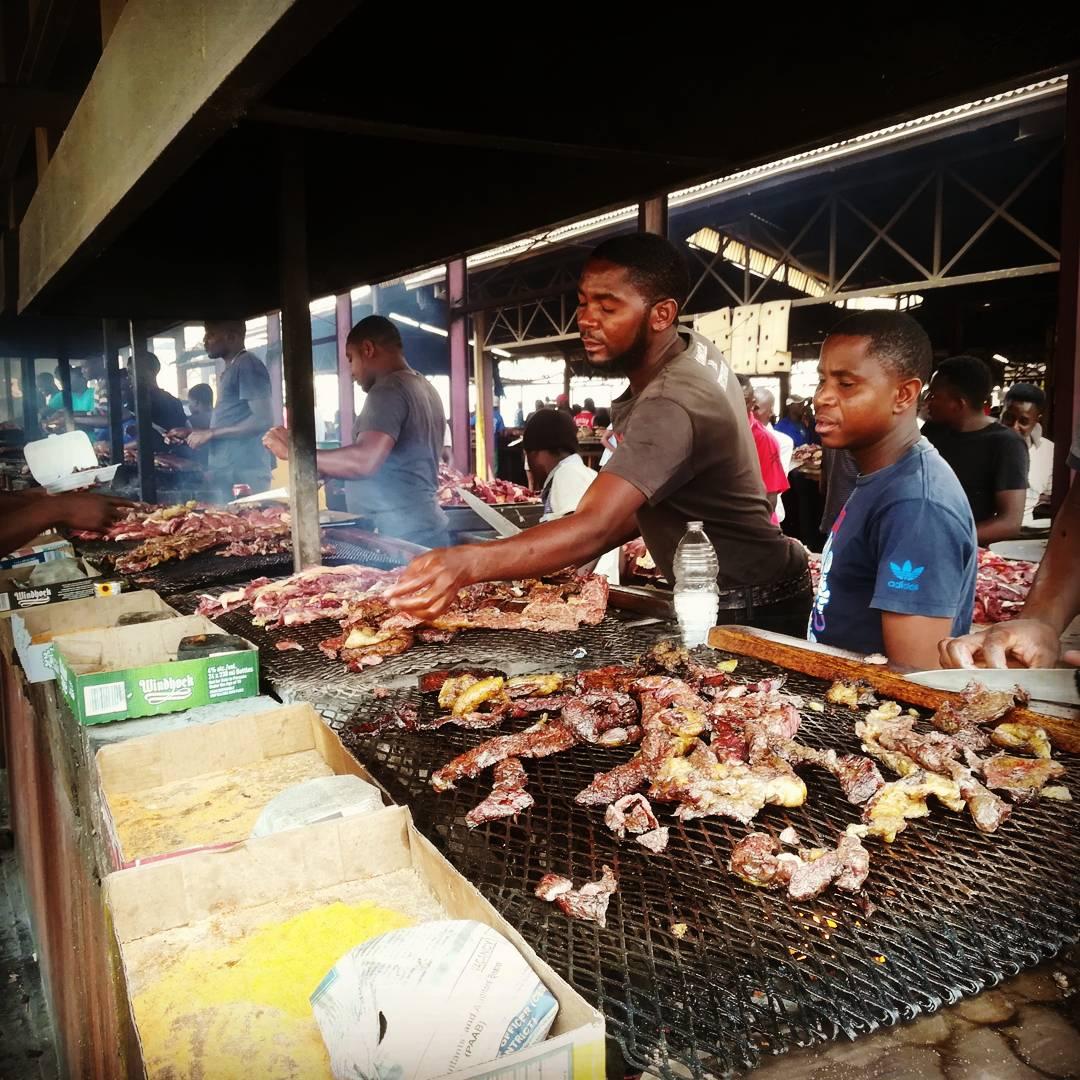
| Kapana | Meat grilled over a fire and served in small portions with optional sides. | Context: Market grills and informal food stalls; each vendor serves it differently. | Ask: Which meat, spice mix and sauce are used, and what comes with the portion? |
|---|
| Braai | Cooking over a fire or coals, rather than one fixed dish. | Context: Homes, camps and lodges; a shared southern African tradition. | Ask: Can vegetables be cooked separately, and what is in the marinade? |
|---|
| Potjie | A slow-cooked pot meal; the meat, vegetables and other ingredients vary. | Context: Home, camp or lodge meals across southern Africa. | Ask: Does the pot contain meat stock, animal fat, dairy or alcohol? |
|---|
| Fish & oysters | Coastal seafood, including farmed oysters; a menu may use several sources. | Context: Atlantic towns such as Walvis Bay, Swakopmund and Lüderitz. | Ask: Which species and origin, and is it served raw or thoroughly cooked? |
|---|
| Omaere | A fermented milk product; household and commercial versions differ. | Context: The name is used in Otjiherero; recipes and other names vary between communities. | Ask: Which milk is used, is it pasteurised, and how is the product stored? |
|---|
| Oshikundu / ontaku | A fermented cereal drink, commonly made with mahangu and malted sorghum. | Context: Associated with Aawambo households and parts of Kavango. | Ask: Which grains and added ingredients are in this batch, and when was it made? |
|---|
| Biltong / eendingu | Names for dried meats; they do not specify one identical recipe or cut. | Context: Biltong is shared across southern Africa; local names and methods differ. | Ask: Which animal, seasoning and storage method? Check packaged ingredients too. |
|---|
| Omagungu | Mopane caterpillars prepared as food, sometimes fried or served with porridge. | Context: Seasonal harvests and markets; availability depends on supply and preparation. | Ask: How are they prepared, and which oil, sauce or seasonings are added? |
|---|
| Omajova | Large wild mushrooms associated with termite mounds. | Context: Seasonal availability after suitable rains; not a year-round menu promise. | Ask: Are these available today, and are they cooked with butter, cream or stock? |
|---|