Home / Destinations / Spitzkoppe

Spitzkoppe

Choose the visit format, confirm current access, and protect the rock, heritage, and shared quiet of this granite landscape.

A destination, not a drive-by photograph

Plan the experience before the viewpoint

Namibia Tourism Board places Spitzkoppe west of Usakos and describes its granite outcrops. The visitor experience is managed separately from Namibia’s national parks, so use the current site operator for entry, camping, guide, heritage, and activity rules rather than applying a national-park assumption.

The most important choice is whether Spitzkoppe is a focused day visit or an overnight stop. From there, settle the gate, booking, facilities, walking plan, heritage access, vehicle, and onward route. Technical climbing requires a separate level of preparation and is not an extension of casual sightseeing.

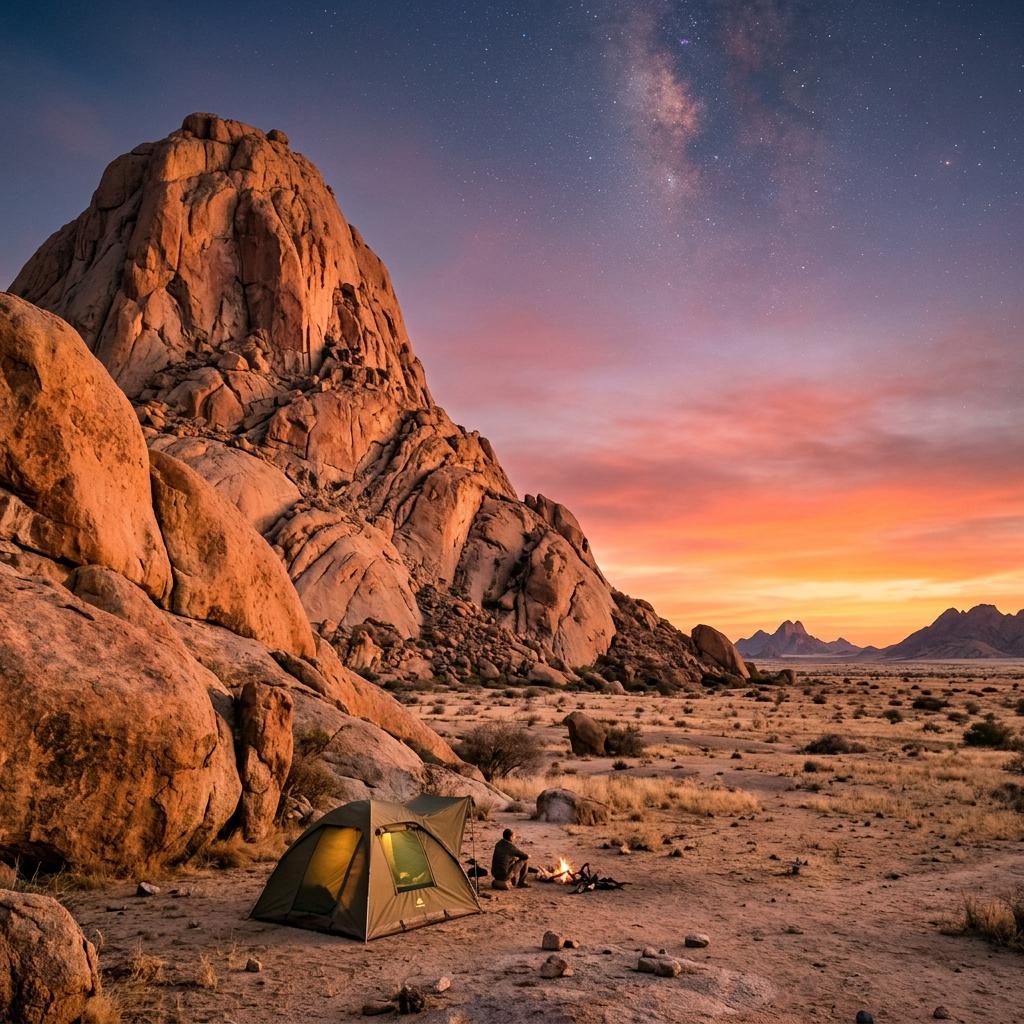
Image note: The hero is an editorial illustration, not a documentary photograph. It does not verify a particular campsite layout, fire policy, weather, vegetation, night sky, tent spacing, or present access condition.

Choose the visit format

Day visit or overnight at Spitzkoppe?

An overnight adds margin and campsite logistics; a day visit keeps the route simpler but creates a firm onward-drive decision. Choose the format that works even if light, weather, or guide availability changes.

One focused activity

Day visit

Choose this when Spitzkoppe fits between two realistic overnight bases. Confirm entry and exit procedures, then prioritize a guided heritage visit, an appropriate walk, or landscape photography rather than trying to complete the whole site.

Reconfirm

A late arrival can turn a day visit into rushed walking or an unsafe onward drive. Do not assume sunset access or a flexible closing time.

More margin, simpler facilities

Rest-camp overnight

Choose this for a slower evening and morning, provided your group is comfortable with the current campsite setup. The operator presently describes basic sites without water or electricity at each pitch and central facilities near reception.

Reconfirm

Reconfirm campsite allocation, ablutions, water, food, fires, waste, lighting, vehicle size, and what the booking actually reserves.

Different access and service model

Cabin or lodge stay

Choose a roofed stay when bedding, private or shared facilities, meals, or reduced camp setup matters. These products are distinct from the rest camp and may have separate entrances, activity areas, or visitor restrictions.

Reconfirm

Do not assume a nearby lodge booking includes public-site entry, rest-camp access, rock-art visits, or transport between properties.

Current information beats an old campsite review

Entry, camping, and operator checks

The current Spitzkoppe Rest Camp website distinguishes day visitors, camping, cabins, and lodge stays. Those pages are the starting point—not a guarantee that availability, facilities, fees, access, or rules will be identical on your date.

  1. 01

    Identify the product and entrance

    Confirm whether you booked the rest camp, a cabin product, a lodge, or only a day visit. Save the correct gate or reception point and the operator’s contact details offline.

  2. 02

    Reconfirm access and booking rules

    Ask about the current entry process, arrival and departure window, campsite assignment, same-day availability, vehicle limits, included access, cancellation terms, and after-hours procedure.

  3. 03

    Match supplies to the facilities

    The rest-camp website currently places water, flush toilets, and showers at reception rather than at individual campsites. Carry enough drinking water and do not treat a restaurant, shop, fuel stop, power point, or signal as guaranteed.

  4. 04

    Book activities separately when needed

    Ask which walks or rock-art sites need a local guide, whether guides must be reserved, where the activity starts, what it includes, and how weather or heat cancellations are handled.

Rock art is protected heritage, not decoration

Namibia’s National Heritage Act includes qualifying rock paintings and engravings within its definition of archaeological material. The operator also describes Spitzkoppe as a protected heritage site. Use the managed visitor arrangement and let the guide set the boundaries.

Read the Heritage Act
  • Use the current operator or authorized local guide for rock-art access, and follow any route closure, group-size, footwear, or photography instruction.
  • Do not touch, wet, chalk, trace, rub, or lean against painted or engraved rock surfaces; keep bags, poles, and tripods clear as well.
  • Do not climb above, beside, or across a heritage panel to reach a viewpoint or pose. A climbing route and a rock-art site require different access decisions.
  • Leave stone tools, pottery fragments, bones, plants, minerals, and loose rocks where they are. Never rearrange material for a photograph.
  • Ask the guide how the site is interpreted and avoid repeating an attribution, age, or story as fact when the evidence is uncertain or the explanation is more nuanced.
  • Keep location sharing cautious for sensitive or less-visited panels, and do not publish directions that bypass the managed visitor route.

Heat, water, surface, return

Choose a walk the whole group can finish

A visible rock feature can still involve exposure, loose ground, route-finding, and a hot return. Ask for the exact activity rather than relying on a generic “easy walk” description.

Distinguish walking from scrambling

A short guided heritage route, an exposed walk, and movement over steep rock are not the same activity. Ask about gradient, surface, exposure, route-finding, shade, and where hands are needed.

Plan around conditions, not a fixed duration

Rock and open ground can become demanding in heat, while wind, rain, or cold can create different problems. Turn around early when conditions, water, footwear, or group pace reduce the return margin.

Carry the return plan with you

Bring drinking water, sun protection, suitable footwear, necessary medication, a charged phone, offline location information, and the operator’s emergency contact. Signal may not be available where it is needed.

Stay on the approved route

Do not use a social-media pin or visible footprints as permission to enter a side path, heritage area, campsite, climbing sector, or neighboring property. Ask first.

Technical activity

Climbing requires competence, permission, and a self-rescue plan

Namibia Mountain Club publishes Spitzkoppe access context and says bolting requires prior consent in collaboration with site management. It also warns that there is no mountain-rescue service operating in Namibia.

That makes route choice, guide selection, equipment, communications, insurance, turnaround, descent, and incident planning core booking decisions—not details to solve at the rock.

Check Mountain Club guidance
  • Treat technical climbing, scrambling, and a guided walk as separate activities; choose only the one that matches the least experienced person in the group.
  • Consult the Namibia Mountain Club and current site management about access, closures, route information, bolting rules, and any required permission.
  • Use an appropriately qualified guide when the team cannot independently assess the route, protection, anchors, descent, weather, and emergency plan.
  • Bring and inspect the equipment required for the chosen route. Do not assume the site, campsite, or a local contact can supply missing technical gear.
  • Verify insurance for climbing and evacuation, identify who would coordinate an incident, and carry communications appropriate to the plan.
  • Turn back when heat, wind, rain, fading light, route uncertainty, damaged equipment, injury, or slower-than-planned progress threatens the descent margin.

Light without a guarantee

Photography and night-sky planning

Spitzkoppe can offer open views and low-light opportunities, but weather, moonlight, dust, access, and neighboring visitors decide the real conditions. Plan techniques and etiquette, not a promised frame.

Sunrise and sunset without a deadline race

Light changes quickly across the rock, but cloud, haze, dust, smoke, and access can change the result. Choose a legal position with a safe return rather than chasing a copied composition.

Night sky without a clear-sky promise

Moon phase, cloud, wind, dust, nearby lights, and weather affect stargazing and astrophotography. Check the forecast and moon, but plan an evening you would still value if stars are limited.

Share the dark and the foreground

Ask before lighting people, tents, vehicles, or another campsite. Keep torches low and brief, avoid sweeping bright beams across visitors, and never light-paint rock art.

Photograph without changing the site

Do not move stones, cut vegetation, build cairns, place equipment on panels, enter a closed area, or fly a drone without the operator’s current permission and any required authority approval.

Ask for measurable details

Accessibility and family planning

The same landscape can be a vehicle-based scenic stop for one visitor and an inaccessible rocky walk for another. Ask the operator to describe the exact route and facilities rather than deciding from photographs.

Accessibility questions

Ask for the surface, slope, steps, handrails, seating, shade, toilet layout, distance from parking, and vehicle access for the exact activity and campsite. “Easy” is not an accessibility specification.

Family pacing

Choose a short, guided outing with a clear turnaround for children or mixed-energy groups. Supervise closely around ledges, boulders, roads, fires, wildlife, and unfenced camping areas.

Overnight comfort

Check sleeping setup, temperature range, wind protection, bathroom distance, lighting, food, water, and emergency needs for every traveler. A dramatic campsite image says nothing about practical comfort.

No universal vehicle answer

Road, vehicle, and arrival planning

The official tourism profile gives the broad position west of Usakos. It does not replace current directions to your chosen entrance or accommodation.

Use the operator for the final approach, Roads Authority for material network notices, and the rental company for what the vehicle and contract permit.

Final approach

Ask the booked operator for the current route and entrance, then compare it with the rental agreement. Do not infer that four-wheel drive is required—or unnecessary—from an old trip report.

Road conditions

Gravel condition can change with maintenance, traffic, wind, and rain. Check Roads Authority notices and request a recent approach update before leaving the last reliable service stop.

Arrival margin

Reach the correct reception with enough daylight to check in, understand the site, find the camp, and change plans. Do not attach a sunset target to a long or uncertain transfer.

Vehicle and supplies

Check tyre condition and pressure guidance, spare-wheel tools, fuel range, water, offline maps, and roadside support. Keep heavy items secured before entering gravel roads.

Ask for the current arrangement

Community and visitor-benefit questions

The operator’s website places Spitzkoppe within #Gaingu Conservancy and describes a management agreement signed in 2012. Because that published agreement had a stated term and governance can change, it should not be used as proof of today’s ownership, revenue split, or community benefit.

Ask for current, specific answers and allow the operator, conservancy, guides, and residents to describe their own roles.

  • What is the current relationship between the operator, Spitzkoppe community, #Gaingu Conservancy, and any other management body?
  • Which visitor payments or levies reach which institution, and how are those arrangements reported or reviewed?
  • Are local guides employed directly, contracted, or paid through visitor fees—and is tipping separate from the guide’s agreed compensation?
  • Who decides how rock art, community history, markets, and cultural visits are presented to visitors?
  • How can visitors buy crafts or services directly without treating residents, homes, or working spaces as tourist displays?
  • Where should a concern about guiding, consent, access, waste, or visitor behavior be reported?

Protect the site and the shared stay

Leave no trace at the rock and campsite

The practical standard is to leave no new route, mark, fire scar, cairn, noise burden, litter, or damage—and to follow stricter instructions whenever the operator or guide gives them.

  • Park, camp, walk, and climb only where the current operator or guide permits; do not create vehicle tracks or shortcuts around barriers.
  • Use designated toilets and waste systems. Pack out anything the site cannot accept, including food scraps, broken gear, batteries, and hygiene products.
  • Light a fire only in the place and conditions explicitly allowed that day. Fully extinguish it and never collect wood or vegetation on site.
  • Do not carve, paint, chalk, stack, or scratch rock. Remove no geological, archaeological, plant, or animal material.
  • Keep music, generators, vehicle lights, and voices low enough that neighboring campers, guides, residents, and wildlife are not forced to share them.
  • Use water carefully, keep food secured, and do not feed animals. Leave the campsite and rest area ready for the next group.

Pair it with real overnight stops

Spitzkoppe route pairings

Spitzkoppe often sits between Windhoek, the central coast, and Damaraland. The useful route is the one that leaves daylight for arrival and enough time for the chosen visit format.

Coast-to-inland contrast

Swakopmund or Walvis Bay → Spitzkoppe

Use Spitzkoppe as a deliberate inland stop after the central coast. The road, check-in, and planned activity need enough daylight; a same-day coast activity plus sunset arrival creates unnecessary pressure.

South-to-north heritage route

Spitzkoppe → Damaraland

This can connect two distinct landscape and heritage stops. Keep Spitzkoppe rock art separate from Brandberg and Twyfelfontein, each with its own guide, access, and interpretation.

Early-trip route

Windhoek → Spitzkoppe → coast

Choose this after a rested start and a complete vehicle handover. If arrival in Namibia, shopping, and the rental briefing consume the day, move the drive rather than reaching an unfamiliar campsite late.

Questions worth settling before you go

Is Spitzkoppe a national park?

This guide does not describe it as one. Spitzkoppe has its own operator-managed entry, accommodation, heritage, and activity arrangements. Use those current rules instead of importing assumptions from an MEFT national park.

Do I need a 4x4?

Not as a universal rule. Ask for the current final approach and any internal vehicle restrictions, then check ground clearance, tyres, weather, driver experience, and rental terms for that route.

Can a day visitor stay for sunset?

Only if the current entry and exit procedure allows it and the onward drive remains sensible. Ask the operator directly; do not treat a photograph or old review as evidence of current access.

Can beginners climb Spitzkoppe?

Do not choose a route from that label. A qualified guide must assess experience, objective, conditions, equipment, access, descent, and emergency planning. A guided walk or non-technical activity may be the appropriate alternative.

Are clear stars guaranteed?

No. Cloud, moonlight, haze, dust, wind, smoke, and local lighting all affect the view. Check conditions, keep lighting considerate, and make the overnight worthwhile without a particular sky.

Planning essentials

Fit Spitzkoppe into the route without turning arrival into a race

Choose a visit format, then work backward through access, daylight, facilities, walking or climbing competence, and the next overnight stop. The right plan remains useful when weather or light changes.

First decision

Day visit or overnight

A day visit protects a simple route; an overnight creates more margin for walking and changing light. Neither format guarantees weather, stars, or a particular campsite.

Route position

Between Windhoek, coast, and Damaraland

Choose the pairing that avoids a late check-in or a rushed onward transfer. The correct entrance and booked product matter more than a map pin.

Booking priority

Access, facilities, and activity permission

Confirm the current operator, gate, booking status, campsite model, water and ablutions, guide, heritage rules, and climbing permissions before paying.

Ways to structure a Spitzkoppe stay

OptionBest for
Day visitorTravelers with a realistic daylight transfer who want one guided or self-contained, operator-approved activity.
Rest-camp campingSelf-sufficient travelers comfortable with basic, dispersed camping and central rather than pitch-side facilities.
Cabin or lodgeTravelers prioritizing bedding, meals, or more services while still visiting the wider Spitzkoppe landscape.

Before you book

  • Confirm the current official operator or property, correct entrance, booking status, arrival procedure, and emergency contact.
  • Ask what the day or overnight fee includes without relying on an old price, campsite map, facility list, or social-media post.
  • Verify drinking water, toilets, showers, electricity, food, waste, fire rules, mobile signal, vehicle size, and campsite allocation.
  • Reserve any required heritage or walking guide and ask about terrain, heat, shade, duration range, footwear, and photography rules.
  • For climbing, confirm competence, current access, site permission, guide credentials, route information, equipment, descent, insurance, communications, and emergency response.
  • Check road conditions, recent rain, the final approach, fuel, tyres, daylight margin, and rental restrictions.
  • For community claims, ask who holds the current agreement, where visitor payments go, and how local guides and vendors participate.

Choose the stop before plotting the drive

Decide on a day visit or overnight, protect enough daylight for arrival, and connect Spitzkoppe to the coast, Windhoek, or Damaraland without a last-minute sprint.

Open Route Planner