Name the airport
Hosea Kutako International Airport and Eros Airport are different handoff points. Put the airport name and terminal contact into every flight, transfer, car-rental, and accommodation message.
Home / Destinations / Windhoek
Turn Namibia’s main arrival hub into a calm airport handoff, a thoughtful city stay, and a well-checked first or final route stage.
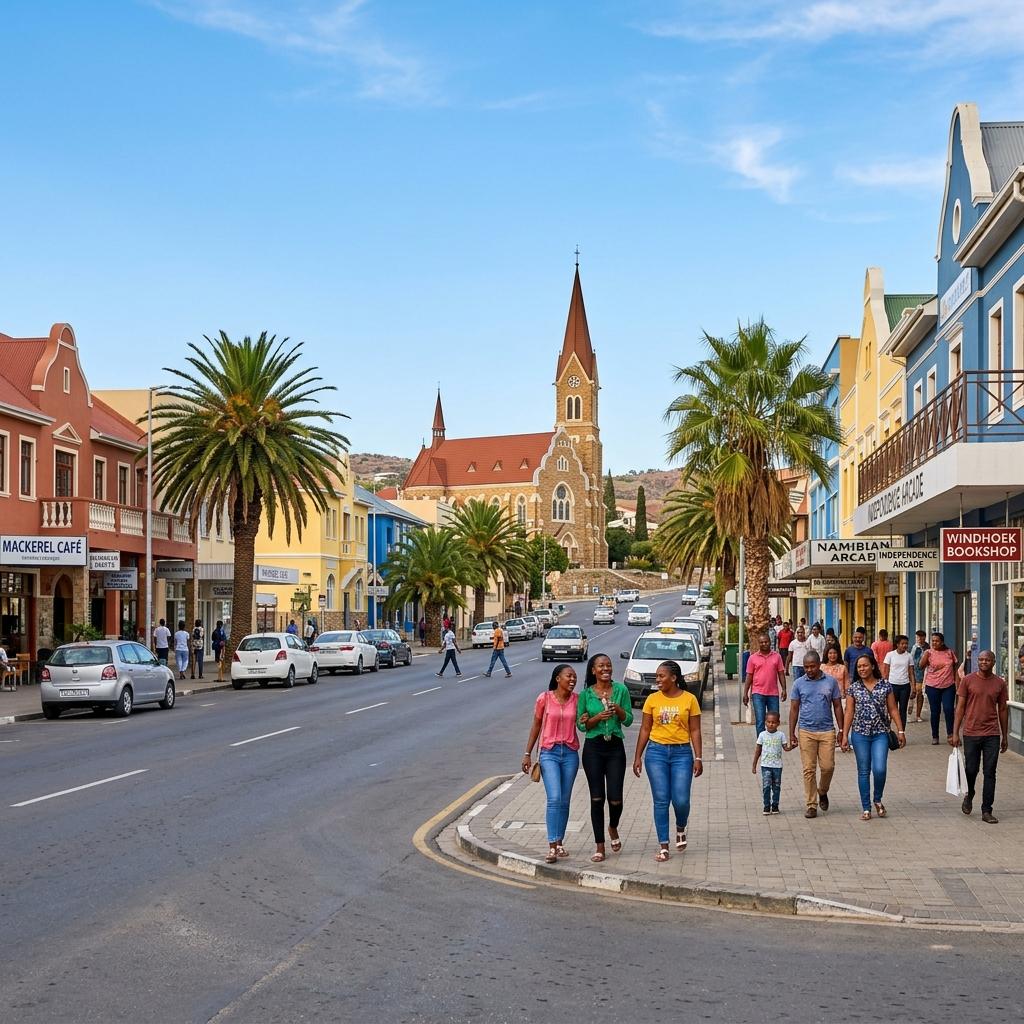
Image note: The hero is an editorial illustration for travel-advisory and city-planning content. It is not a documentary image, current Windhoek street scene, route map, or record of present conditions.
Start with the handoff
Windhoek is Namibia’s capital and a practical point for international arrivals, domestic or charter connections, vehicle collection, trip supplies, museums, meals, and route changes. Those functions are spread across two airports and a large urban area, so “meet in Windhoek” is not a complete plan.
Give the first and last nights a job: recover from travel, complete a careful vehicle handover, engage with the city, or protect the flight home. Trying to make one night do all four can turn small delays into rushed driving and missed context.
First and last nights
The flight, airport, driver, vehicle, room, and onward route should form one chain with a named fallback at every handoff.
Hosea Kutako International Airport and Eros Airport are different handoff points. Put the airport name and terminal contact into every flight, transfer, car-rental, and accommodation message.
Allow for immigration, baggage, transfer coordination, vehicle paperwork, food, and sleep. A late or delayed arrival is a poor foundation for a fixed long-distance drive.
Airport collection can simplify the handoff; city collection can postpone the inspection until everyone is rested. Compare the exact desk, after-hours terms, transfer, parking, and next-day route.
Return with margin for fuel, vehicle inspection, road delays, repacking, and the correct airport transfer. Do not make an international departure depend on an optimistic same-day drive.
Airport-to-city handoff
Use Namibia Airports Company pages for airport identity and facilities, then verify the live flight with the airline and the ground handoff with the company that will actually provide it.
| Airport | Planning role | Handoff | Reconfirm |
|---|---|---|---|
| Hosea Kutako International Airport (HKIA) | The main international gateway, located outside the city across the Khomas highlands. | Pre-arranged transfer, confirmed car-rental desk, or another named provider whose pickup point and flight-delay process are in writing. | Live flight, terminal meeting point, driver or desk identity, after-hours procedure, luggage capacity, child restraint, accessibility assistance, fare or fee, and city address. |
| Eros Airport | An urban airport used by a mix of charter, private, and other air services; it is much closer to central Windhoek than HKIA. | A confirmed transfer or rental arrangement matched to the actual operator, flight, luggage, and onward address. | Whether the flight really uses Eros, baggage limits, aircraft and operator terms, arrival contact, assistance, and any connection between Eros and HKIA. |
A connection between HKIA and Eros is a ground transfer between different airports. Confirm the itinerary, baggage handoff, transfer provider, traffic margin, and missed-connection responsibility instead of treating “Windhoek” as one terminal.
Vehicle collection
A reservation category is not the vehicle check. Allow enough light, attention, and supplier time to document the exact car and understand its support process.
Get the desk or delivery address, staffed window, flight-delay handling, late fee, shuttle arrangement, and a number that will be answered on arrival.
Confirm licence, passport, named drivers, payment-card requirements, deposit, cross-border documents if relevant, and what the supplier will accept before the desk visit.
Inspect bodywork, glass, wheels, tyres, roof, underbody indicators, interior, fuel, and equipment with the supplier. Keep the signed report and dated photos allowed by the contract.
Locate the spare wheel, jack, wheel tools, warning equipment, fuel release, lights, and tyre guidance. Ask the supplier to demonstrate anything unfamiliar.
Save the breakdown and accident process offline. Recheck gravel, single-vehicle, tyre, glass, water, sand, towing, after-dark, and unauthorized-road wording.
Set navigation before moving, keep luggage out of sight, and add water, food, fuel, phone power, and daylight margin before the first intercity stage.
Where to base
This is a logistics comparison, not a hotel list or a neighborhood ranking. Check the exact property and daily movement before paying.
Useful when the priority is a museum, gallery, meeting, meal, or short city program. Plot the actual entrances and transport between them; “central” does not prove a comfortable walk or step-free route.
Verify
Parking or pickup, street-facing noise, stairs or lift, after-dark arrival, restaurant access, and the route to every planned stop.
An address near the road used for the next stage can reduce cross-city driving, especially with a packed vehicle. Choose it from the exact route rather than a broad suburb label.
Verify
Entrance direction, secure luggage plan, meal options, fuel stop, opening procedure, and whether the advertised road connection matches the intended exit.
Useful when the flight handoff matters more than city sightseeing. “Airport” can refer to HKIA, Eros, or simply a transfer service, so compare the real journey rather than the name.
Verify
Which airport, transfer duration assumptions, included trips, flight tracking, meal plan, accessibility, and what happens after a schedule change.
Useful for laundry, repacking, groceries, dietary control, or a pause between route sections. It still needs a transport and food plan for the arrival day.
Verify
Kitchen equipment, refrigeration, laundry, nearby supply options, backup meals, water guidance, parking, and check-in process.
Museums, heritage, and the present city
The City of Windhoek notes the names Otjomuise and /Ae //Gams and histories that predate the German colonial fort. The city’s colonial-era structures matter as evidence, but a visit built only around their façades sidelines pre-colonial life, forced removals, anti-colonial resistance, independence, and the capital people make today.
Use museum and gallery interpretation to connect those layers. Confirm opening and photography rules for each institution, and ask before photographing government or security-sensitive buildings.
The municipal museum describes galleries covering pre-colonial Windhoek, the German period, life in the Old Location, voices from the past, present-day Windhoek, and the city’s natural setting. Confirm current public access directly because published hours can change.
The Museums Association describes the Independence Memorial Museum as a repository for material on anti-colonial resistance and the liberation struggle. Use it to place nearby colonial-era structures within a larger Namibian account.
The National Art Gallery of Namibia is a state-owned gallery in Windhoek. Check its current exhibition, event, access, and photography information instead of treating a permanent collection or opening schedule as fixed.
Markets, food businesses, music, galleries, public space, and daily work are not an optional footnote to monument visits. Choose current events and locally run experiences with clear consent and payment arrangements.
Food and markets
The municipality recognizes open markets and temporary trading sites as part of Windhoek’s economy. Choose a market, food business, or culinary experience from current local information and its real trading day—not from an old “must-visit” list.
Read the Namibian food guideCheck the current trading or kitchen day, transport, parking, seating, payment method, and return arrangement. A market or restaurant name alone does not settle those logistics.
A public-facing stall is still someone’s workplace. Ask the person, accept a no without negotiation, and agree on payment before ordering food or goods.
Name allergies, cross-contact concerns, ingredients, religious requirements, texture needs, or a child’s dependable foods. Do not rely on “vegetarian,” “gluten-free,” or another broad label without follow-up.
Browse at the pace the setting allows, ask before handling items, and pay the agreed price. Do not expect a trader or diner to provide an unscheduled cultural explanation.
Nearby nature option
MEFT describes Daan Viljoen Game Park west of Windhoek as a highland-shrubland park with day-visit, picnic, accommodation, and hiking possibilities. The official profile also notes that booking is needed for the longer overnight trail.
Reconfirm current entrance, fees, trails, booking, food, accommodation, vehicle, heat, and wildlife instructions. It can add a nearby nature stop, but it is not a substitute for Etosha and no species sighting is promised.
The chain is only as accessible as its least-defined handoff. Put functional requirements into the airport, transfer, accommodation, activity, and vehicle bookings separately.
No city stay is guaranteed safe, and broad neighborhood labels age badly. Use current official advice and provider-specific arrival instructions.
Onward route pairings
The capital is a hub, not proof that every destination belongs on the next day. Choose one direction and protect the handoff.
Southwestern desert route
Collect supplies and complete the vehicle check before leaving the capital. Confirm the chosen road, final lodge access, fuel, daylight, and any gravel restrictions in the rental contract.
Plan Sossusvlei accessNorthbound wildlife route
Choose the Etosha gate and overnight from the booked accommodation, not from the park name. A first-night stop can separate flight fatigue from the northbound drive.
Plan EtoshaGranite-landscape route choice
Use Spitzkoppe as a separate day visit or overnight only when the road, entry, heat, and campsite plan leaves enough daylight. It is an optional route stage, not a substitute name for Damaraland.
Plan SpitzkoppeLonger route toward Fish River Canyon and Lüderitz
A southern extension needs its own sequence of overnight bases and fuel planning. Use Windhoek to verify the whole chain before committing to the first long stage.
Plan Fish River CanyonArrival and departure planning
The airport, transfer, room, vehicle, city plan, and onward road should work as one sequence. Reconfirm each provider where responsibility changes hands.
First question
Put HKIA or Eros into the booking. The flight, transfer, rental desk, luggage terms, and city handoff must all point to the same arrival place.
Vehicle decision
Compare after-hours pressure with the extra transfer and next-day collection. The safer plan is the one that allows a careful inspection and a rested driver.
Departure protection
Keep vehicle return, road delay, repacking, and airport transfer separate from the flight’s hard deadline.
| Option | Best for |
|---|---|
| Central civic base | Museums, galleries, a city appointment, and meals with shorter planned transfers. |
| Route-oriented city base | Travelers with a packed rental vehicle and a clear next-road direction. |
| Airport-linked base | Late arrival, early departure, or a connection where the airport handoff dominates the stay. |
Choose the airport, arrival support, vehicle timing, base, and first route direction as one plan.
Start the Trip Plan